Dr. Benjamin Rush's talk "On the Duty and Advantages of Studying the Diseases of Domestic Animals" laid the cornerstone for the establishment of the School of Veterinary Medicine at the University of Pennsylvania and the concept of One Health.
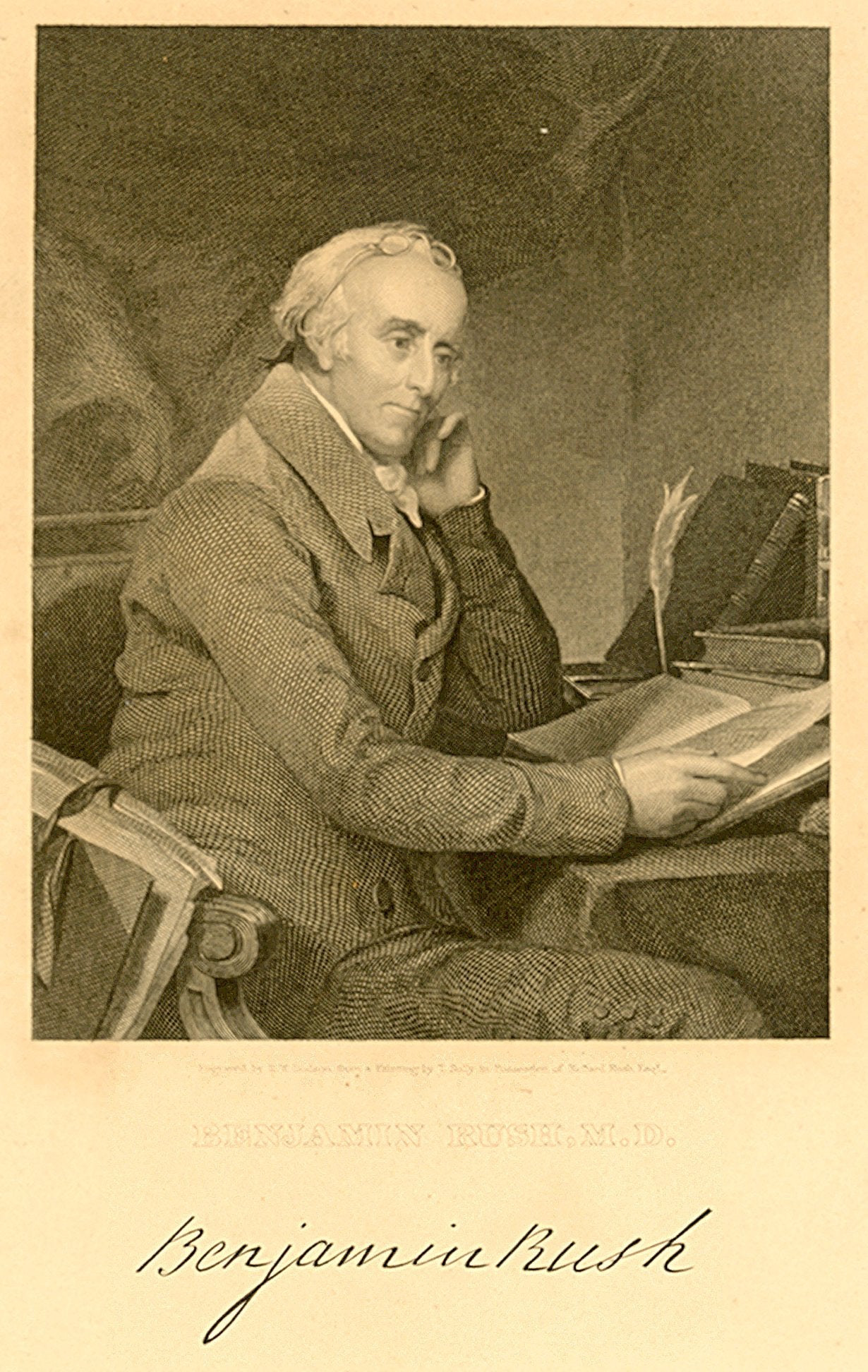
Link: Internet archive| other formats
Dr. Leonard Pearson (1868-1909) graduated from the Veterinary College of the University of Pennsylvania in 1890 and was the Dean from 1897-1909. A tribute: In Memoriam: Leonard Pearson was published on his early death.
Dr. Pearson was an avid advocate of the profession and was involved in many associations and societies dedicated to developing veterinary science. He prepared two documents addressing the need for and the requirements of a veterinary education.

 The veterinary profession: its relation to the health and wealth of the nation, and what it offers as a career
by
This pamphlet, published in 1897, contains a number of short articles, by several members of the emerging veterinary profession, describing some of the aspects of veterinary work, and its relation to the health and wealth of the nation.
The veterinary profession: its relation to the health and wealth of the nation, and what it offers as a career
by
This pamphlet, published in 1897, contains a number of short articles, by several members of the emerging veterinary profession, describing some of the aspects of veterinary work, and its relation to the health and wealth of the nation.
 The Winning of Animal Health
by
The Winning of Animal Health: 100 Years of Veterinary Medicine tells the story of the individuals and organizations that have worked together in the face of animal disease calamities to build veterinary science to the professional level it enjoys today.
The Winning of Animal Health
by
The Winning of Animal Health: 100 Years of Veterinary Medicine tells the story of the individuals and organizations that have worked together in the face of animal disease calamities to build veterinary science to the professional level it enjoys today.
 A Concise History of Veterinary Medicine
by
The History of the Horse Doctor: a brief summary of 4000 years of veterinary history (Book & CD-ROM)
by
A Concise History of Veterinary Medicine
by
The History of the Horse Doctor: a brief summary of 4000 years of veterinary history (Book & CD-ROM)
by
 Veterinary Medicine: An Illustrated History
by
Veterinary Medicine: An Illustrated History is a comprehensive historical work focusing on three primary themes: the evolution of veterinary medicine, the role of animals throughout recorded history, and the unique human-animal bond.
Veterinary Medicine: An Illustrated History
by
Veterinary Medicine: An Illustrated History is a comprehensive historical work focusing on three primary themes: the evolution of veterinary medicine, the role of animals throughout recorded history, and the unique human-animal bond.
 The Good Doctors
by
The Good Doctors
by
 The Care of Brute Beasts
by
This book is about medical beliefs and practices for animals in early modern England.
The Care of Brute Beasts
by
This book is about medical beliefs and practices for animals in early modern England.
 Valuing Animals
by
Over the course of the twentieth century, the relationship between Americans and their domestic animals has changed dramatically.
Valuing Animals
by
Over the course of the twentieth century, the relationship between Americans and their domestic animals has changed dramatically.
 From Farriery to Veterinary Medicine 1785-1795
by
From Farriery to Veterinary Medicine 1785-1795
by
 The Black Man in Veterinary Medicine: The black man in veterinary medicine : Afro-American-Negro-Colored
by
Rev. ed. William H. Waddell, VMD, V'39 describes his experiences becoming and practicing as a veterinarian. He identifies Penn Vet's pioneer Black students and inventories the history of Black students at other US Schools of Veterinary Medicine.
The Black Man in Veterinary Medicine: The black man in veterinary medicine : Afro-American-Negro-Colored
by
Rev. ed. William H. Waddell, VMD, V'39 describes his experiences becoming and practicing as a veterinarian. He identifies Penn Vet's pioneer Black students and inventories the history of Black students at other US Schools of Veterinary Medicine.

The 1,054 rare volumes of the Fairman Rogers Collection, many of which have been digitized, serve as a foundation for scholarly study of the role of the horse in the technical, scientific, and social evolution of 19th-century European and North American history.
